Sona Meleterova/Getty Images
Why Cadillac has already earned the respect of its rivals
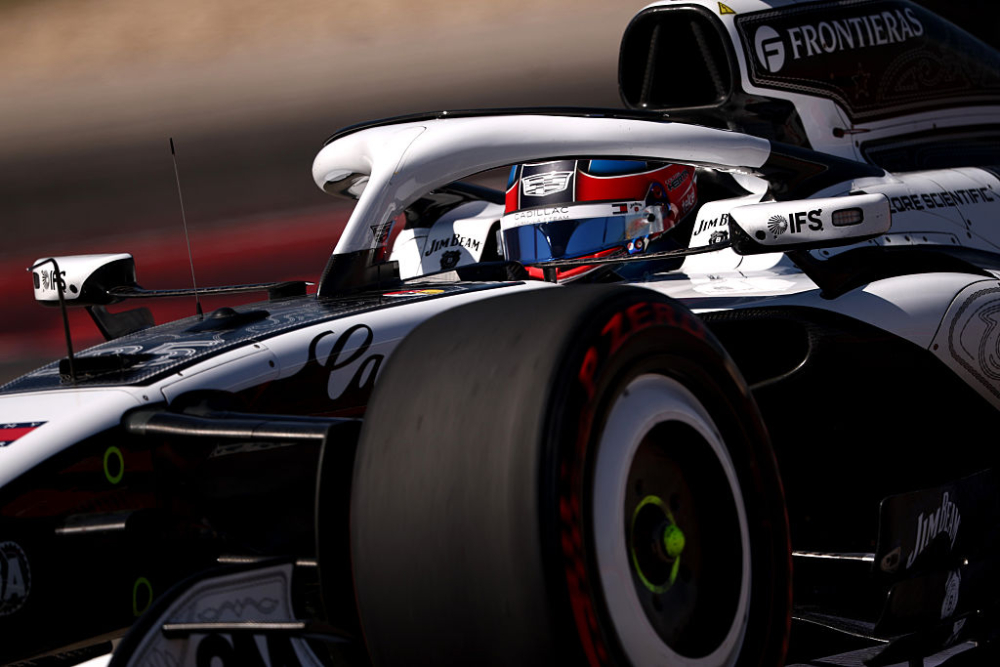
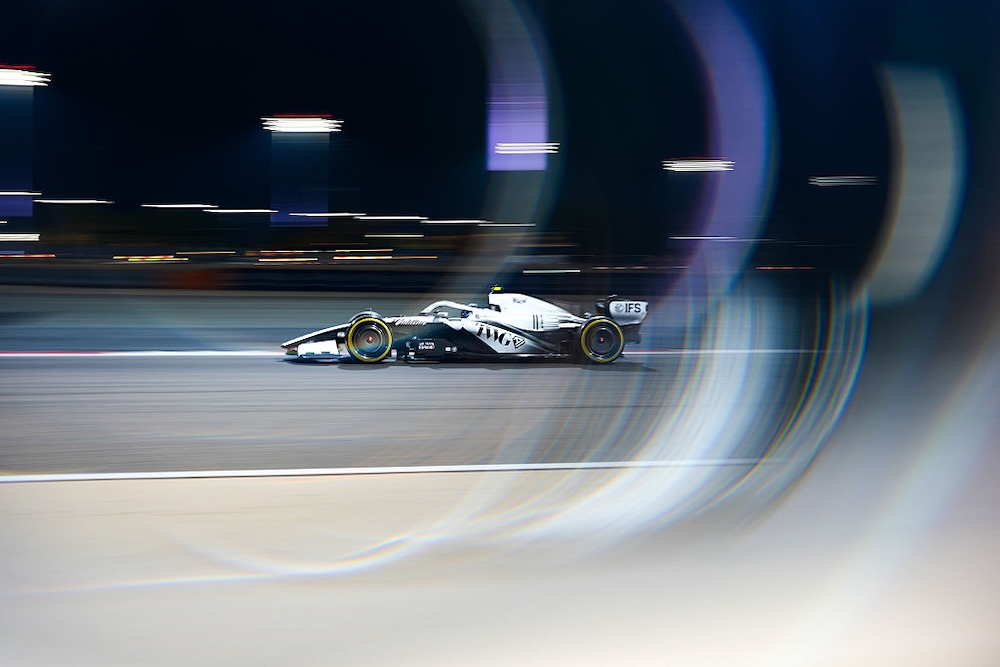
Amid the mystery, uncertainty, and politics of Formula 1 pre-season testing, there was one unanimous conclusion in the paddock: Cadillac has done an outstanding job. Characterized by quiet admiration and remarks about a job well done, rather than hyperbole, this is simply about professional respect from those who know how monumental a task it is to build a modern grand prix team from scratch.
Cadillac is not a contender at the front of the field, but it was always absurd to think it could be in the short-to-medium term. Everything we saw in testing suggests that it will deliver backmarker respectability straight out of the box. The legitimate doubts over whether the car would be fast enough to qualify regularly under the 107% rule have been blown out of the water. Its ultimate laptime was 3.6% down, and while race pace might be a little less impressive given the car is light on downforce and therefore works the tires harder, Cadillac won’t be too far adrift and can legitimately harbor ambitions of fighting with struggling Aston Martin. Even with the usual caveats about judging testing performance, that’s impressive. It might not even be so far off Williams. That’s a big win.
“We firmly believe we’ve got a platform that we can really start moving forward on, that’s probably the most you could ever ask from a new team, unless it’s a complete miracle,” says team principal Graeme Lowdon. “We’re dealing with the same laws of physics as every other team, we’re in a cost-capped environment, we’ve had to expend a huge amount of effort and energy as a team just to start as a new team. To absorb all of that and have a platform that I feel we can build on, that's a really positive start.”
There was a time when an F1 team was effectively just a larger single-seater racing outfit, but not anymore. Today, they are enormously complex entities comprising multiple departments. Cadillac is, for now, a relatively small F1 team, albeit not the smallest, with a staff that currently stands at just under 600 people. That number includes those in the British base opposite Silverstone circuit, as well as in the USA. Simply getting that many qualified, motivated and suitable people is a vast undertaking, let alone the challenge of onboarding them and integrating them into an organization that’s rapidly expanding. A team requires equipment, structure, facilities – including all of the mundane departments like finance, marketing and human resources that are far from any fan’s thoughts when they are watching the grand prix on a Sunday. All of this must happen simply to race two cars 24 times a year.
Cadillac doesn’t even have a complete base yet, with its Silverstone site operational but still some way off its intended final form. Construction work on the American hub at Fisher’s, Indiana (the team prefers to refer to this as Indianapolis) isn’t due for completion until “later this year, [or] in the first quarter of 2027” according to Dan Towriss, CEO TWG Motorsports, which co-owns the team along with GM. Those facilities need to be packed with state-of-the-art equipment and machinery, as well as requiring strong communications mechanisms that work in real-time. That requirement connects to the Cadillac Super Bowl ad that incorporated JFK’s famous Rice University “we choose to go to the moon” speech, as Lowdon has spoken of the communications infrastructure being inspired by the mission control mechanisms of NASA created for the Apollo missions.
Then there’s the knowledge and process. Regardless of how skilled and experienced your recruits are, you still need to develop that institutionally. Even Cadillac’s least experienced rival, Haas, has 10 years on the clock as a team racing in F1 and that means vast swatches of historical data and accumulated IP to lean on. You must develop your simulation facilities, work through calibration, design every single nut and bolt that makes up an F1 car – the list is endless. Cadillac is still playing catch-up beyond what it has so far done. When the project started, none of its in-house systems were proven in F1, yet they have been tested in recent months in the most public way possible with the prospect of a deluge of negative headlines had the car not logged the miles. That Cadillac had such a successful pre-season, hitting all of its key timeline objectives, and absolutely looked the part on and off track is remarkable. There weren’t even any hidden crises to be solved.
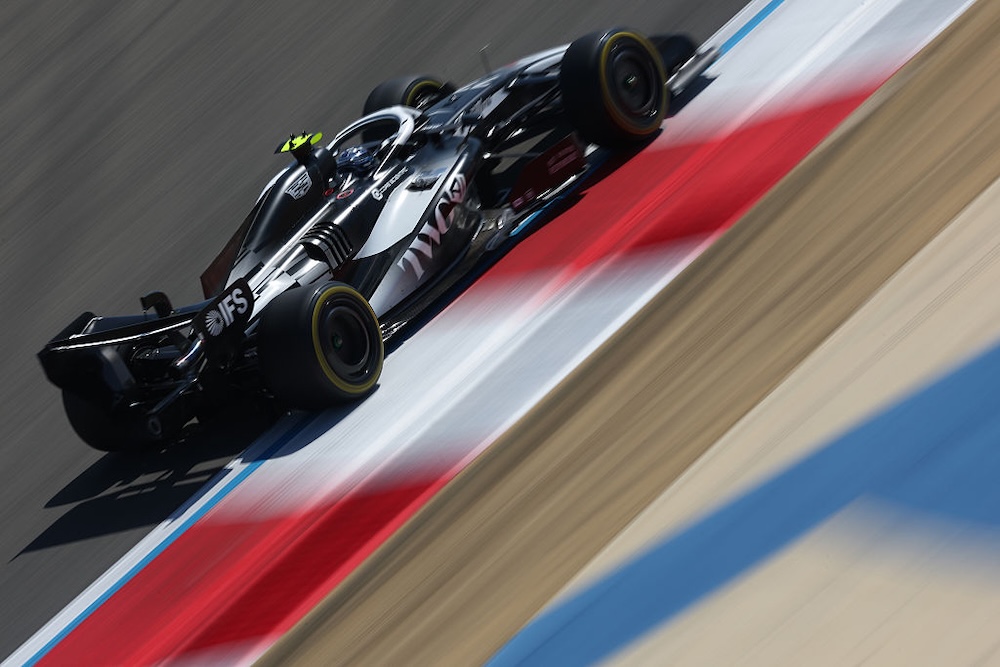
Cadillac's DIY approach to F1 means a steeper initial learning curve, but a potentially higher ceiling - eventually. Mark Thompson/Getty Images
“Honestly, very little,” says Lowdon when asked if any emergency troubleshooting was required. “A lot of it is the stuff that you can't really see. When you come in as a new team, there's an awful lot of systems that you have to interact with and integrate with, and that's a challenge in itself because a lot of that you can't do until you're actually here. So those are areas where we have to fast-track a lot of focus.
“I'm really pleased with the progress and the problem-solving, but also the way that we've gone about solving problems as a team has been really in a very calm manner. It's very easy to assess it in the garage, but also in the engineering meetings. Actually, it's one of the attributes about the team that I really noticed at the shakedown in Silverstone. We walked in the garage that morning, and what I saw was a calm, collected Formula 1 team ready to go to work. If you've got that as a platform, you can really, really build, whereas if you walk in a garage and there's mayhem and chaos and whatever, you might still go faster, but you'll hit a ceiling eventually.”
None of this is about excuses, just realism. Lowdon has spoken of the “limitless” ambition of the team, but it will take years to deliver on that. For example, there’s an in-house engine program up and running that Towriss recently said is ahead of schedule and on target to replace the Ferrari customer power unit in 2029. Whether or not that happens could depend on external factors in terms of whether there’s any kind of change of timeline by the FIA for power units, but he stressed that getting a Cadillac engine on the grid at the earliest opportunity is a priority.
That the team is in this position is only possible because of the bold commitment to investing even when its place on the grid was uncertain. The new team application process opened in early 2023, with what was then an entry under the Andretti banner accepted by the FIA in October that year. However, at the end of January 2024, F1 itself rejected the team – and the green light is required from both the regulator (FIA) and promoter (F1). It wasn’t until March 2025 that Cadillac was finally officially let in. Had it waited until then to create the team, it wouldn’t have been on the grid this year, let alone looking so respectable. While confidence was always high that the rejection by F1 could not stand, with various legal mechanisms open to force the door open, it was still a gamble. The same could be said of those who joined the team’s staff before it was given the green light.
Given how solid Cadillac looks, it’s ironic that F1’s rejection statement was so damning. It would be a mistake to scrutinize what was said too seriously because it was a classic example of throwing everything at it to justify a decision that was clearly made on financial grounds. That was later resolved by Cadillac coming in for 2026 under the new Concorde Agreement, which required the payment of a higher anti-dilution fee of $450million that is split between the existing teams. What’s more, while this is the same project ,the transformation from a TWG Motorsports-owned Andretti team to one it now co-owns with GM, such changes did play a part in the reversal.
Therefore, it’s important to be wary of the narrative that any impediments were about not believing America could have a successful F1 team. While there are legitimate question marks about the practicalities given the established F1 technical ecosystem is based in Europe, with most (but not all) of the specialist companies in that region, that is a different reservation to believing American organisations couldn’t do the job, period. That said, F1’s claim that the team could not be “competitive”, albeit defined as winning races and podiums, looks even more groundless in retrospect as long-term, there’s a clear pathway to such results.
So what’s possible this season? It would be a mistake to recalibrate the expectations upwards too dramatically. Scoring a point on merit by having the pace to finish in the top 10 without relying on the misfortune of others would be a miracle. Chances are, Cadillac will finish last in the championship, and likely without a point. Doing that without being way off the back is a win. But anything more than that, every time a competitor is beaten, is another victory. After all, while the last team to join F1, Haas in 2016 bagged a couple of top-six finishes in its first three races, that was a car that heavily leaned on Ferrari technology. Cadillac is going its own way, as while it uses the Ferrari engine and gearbox internals, it designs its own gearbox casing and suspension. That means a higher ceiling longer-term, but a steeper curve early on. Full works teams have the highest performance potential in F1, and that’s what Cadillac aspires to be.
This will be a tough season for Cadillac and it will hit bumps in the road. Not least, that includes the challenge of designing its 2027 car while racing and developing its ‘26 machine. But what matters is that rather than playing catch-up from seconds behind the rest of the pack, it’s building from a solid foundation. The target for ‘26 is to develop the car, with what’s promised as an “aggressive” plan in place and some changes intended for as early as Melbourne, and try and pick off as many rivals as possible. And that’s the key for Cadillac now, constant improvement. It’s futile to set a horizon for getting to the front in F1, but if it can keep evolving, step by step, eventually it will get there.
That’s why it’s wise to avoid replicating Kennedy’s target of setting a timeline such as getting to the moon by the end of the decade. Cadillac has arrived, and it’s immediately credible. Now, the long, hard grind to climb the grid begins.
Edd Straw
Edd Straw is a Formula 1 journalist and broadcaster, and regular contributor to RACER magazine. He started his career in motorsport journalism at Autosport in 2002, reporting on a wide range of international motorsport before covering grand prix racing from 2008, as well as putting in stints as editor and editor-in-chief before moving on at the end of 2019. A familiar face both in the F1 paddock, and watching the cars trackside, his analytical approach has become his trademark, having had the privilege of watching all of the great grand prix drivers and teams of the 21st century in action - as well has having a keen interest in the history of motorsport. He was also once a keen amateur racing driver whose achievements are better measured in enjoyment than silverware.
Read Edd Straw's articles
Latest News
Comments
Comments are disabled until you accept Social Networking Cookies. Update cookie preferences
If the dialog doesn't appear, ad-blockers are often the cause; try disabling yours or see our Social Features Support.